Your weekly dose of Apple news, iOS guides & more → Subscribe FREE

Apple Announces MacBook Air M5, M5 Pro Chips and New Studio Displays
Apple unveils the MacBook Air M5, new M5 Pro and M5 Max chips for MacBook Pro, and the new Studio Display lineup with Thunderbolt 5 and ProMotion support.
PRODUCT LAUNCH
3/4/20268 min read


On the second day of Apple Event week, the next round of product announcements arrived. Like many Apple fans, I was ready for it. Yesterday I spent quite some time refreshing Apple’s Newsroom page, waiting to see what would be announced.
There’s always something exciting about these moments. Even without a live keynote, the anticipation builds as rumors circulate and everyone waits for the official reveal. And this time, Apple had a couple of interesting new products to share. Apple announced the MacBook Air M5, MacBook Pro with M5 Pro and M5 Max and 2 new Studio Displays including the all new Studio Display XDR. Let’s take a closer look, and I’ll share my thoughts on these new products.
MacBook Air M5
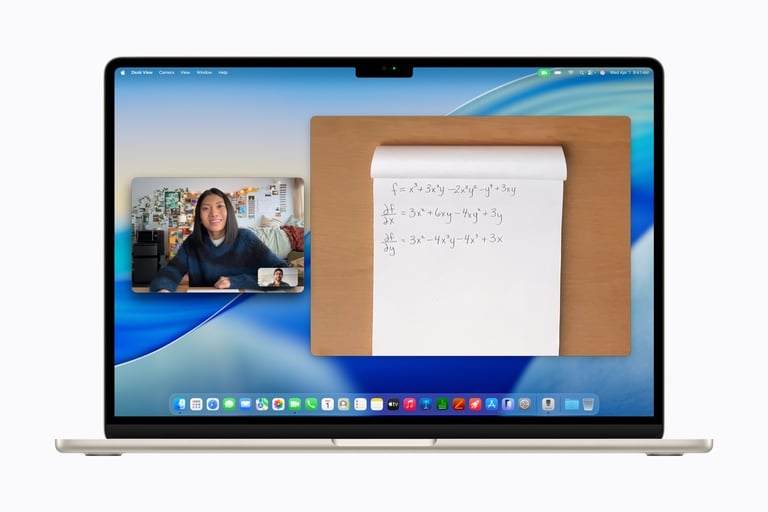
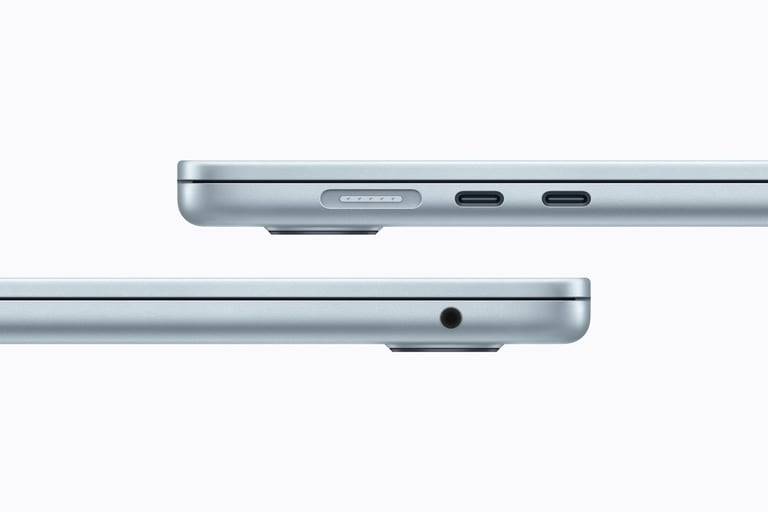
This is the new MacBook Air M5 and honestly it looks like a very solid update to one of the most popular laptops out there.
The big upgrade here is the new M5 chip, which promises faster performance and better AI capabilities. Apple says the CPU is faster and the GPU is next-generation, and each core now has a Neural Accelerator to help with AI tasks. That means everything from creative work to AI-powered apps should feel quicker and smoother.
Another thing I really like is that Apple doubled the starting storage. Thats amazing! The MacBook Air now begins at 512GB, which feels much more reasonable than before. And if you need more space, you can configure it all the way up to 4TB, which is great if you work with large files or creative projects. The MacBook Air M5 now comes standard with the Apple 40W Dynamic Power Adapter that was introduced with the iPhone 17 Pro.
Connectivity also gets a big upgrade thanks to Apple’s N1 wireless chip, bringing Wi-Fi 7 and Bluetooth 6 support on this new MacBook. That makes the laptop more future-proof, especially as faster networks become more common.
Of course, the MacBook Air still keeps what people already love about it. It’s thin, light, and built from aluminum, and it features a beautiful Liquid Retina display, a 12MP Center Stage camera, and up to 18 hours of battery life. The speakers support Spatial Audio, and you get two Thunderbolt 4 ports with support for two external displays, which is really nice if you work with a multi-monitor setup.
The new MacBook Air M5 will be available in 13-inch and 15-inch models, and it comes in Sky Blue, Midnight, Starlight, and Silver.


One thing I’ve always loved about the MacBook Air is how incredibly light and travel-friendly it is. If you’re someone who works remotely or moves around a lot, that really makes a difference. You can easily slip it into your backpack and barely notice the weight.
At home, I’m currently using the MacBook Air M4, and even that model already feels incredibly fast and smooth for everyday work. I use this for blog posts, browsing, video calls etc and it works really well.
That’s why it’s impressive to see Apple already pushing things further with the new M5 version. If the M4 already feels this fast in daily use, the M5 will likely make the MacBook Air an even more powerful and future-proof laptop. Curious to test this device and see if this can be my potentional next laptop.
MacBook Pro with M5 Pro and M5 Max
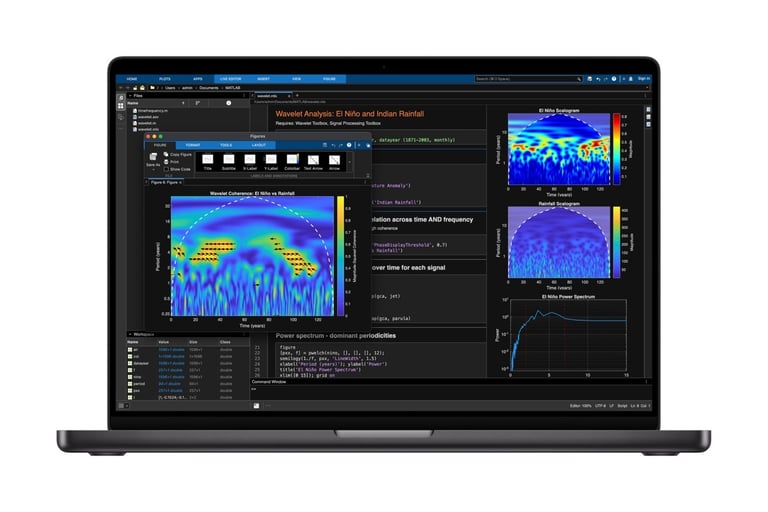
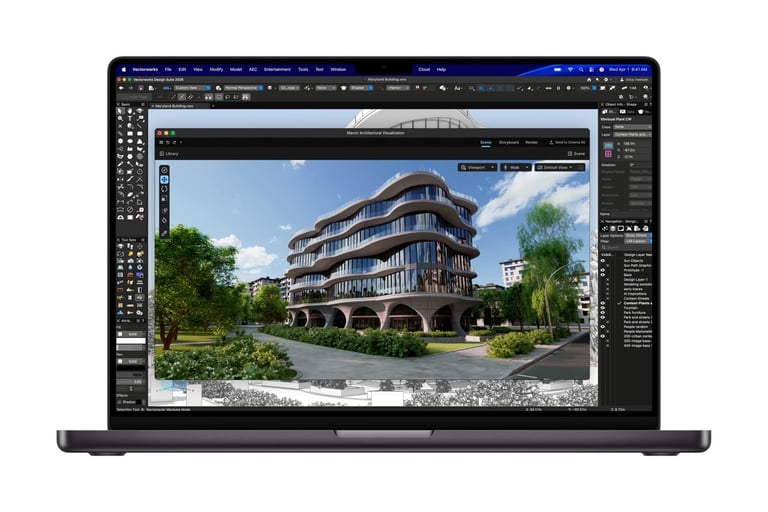
Apple also introduced the new Apple MacBook M5 Pro and Apple MacBook M5 Max, the latest Apple silicon designed to power the new MacBook Pro models.
These chips are built on a brand-new design Apple calls Fusion Architecture. In simple terms, Apple combines two chip components into one powerful system, allowing everything to work together faster and more efficiently. Inside the chip you’ll find the CPU, GPU, Neural Engine, memory controller, media engine, and support for Thunderbolt 5.
The new chips come with an 18-core CPU, including six extremely powerful “super cores” and twelve new performance cores designed to handle demanding tasks efficiently. According to Apple, this can boost performance for professional workloads by up to 30 percent, which is impressive for tasks like video editing, software development, or complex data work.
Graphics performance also gets a big upgrade. The GPU can scale up to 40 cores, bringing stronger performance for things like 3D rendering, visual effects, and ray tracing. Apple also added Neural Accelerators in each GPU core, which helps improve AI performance dramatically.
What stands out to me is how much Apple continues to push the performance of its own silicon. The focus isn’t just on raw power, but also efficiency and AI capabilities. That combination is exactly what makes the MacBook Pro such a strong machine for creative professionals and heavy workloads.
The new MacBook Pro models with the M5 Pro and M5 Max chips are available for pre-order starting March 4, with availability beginning March 11.
Personally, I’ve always liked the MacBook Pro models because they’re built for heavier work. At home, I still use my MacBook Pro (M1 Pro) almost every day when I need to handle more demanding tasks. Even in 2026, that machine is still incredibly fast and reliable for things like editing, multitasking, and running heavier workflows.
Seeing these new Apple M5 Pro and Apple M5 Max chips makes me think that the next MacBook Pro could eventually be my next upgrade. Apple keeps pushing performance further, and for professional workloads the Pro models are simply hard to beat.
But at the same time, I’m also really curious about the new performance of the MacBook Air (M5). The MacBook Air has become so powerful in recent years that it almost feels like it could handle most of my daily work as well. Because of that, I’m honestly a bit in doubt about what my next Mac should be. The powerhouse MacBook Pro, or the incredibly light and capable MacBook Air.
It’s a good problem to have, and it shows how strong Apple’s lineup has become.
Studio Display and Studio Display XDR
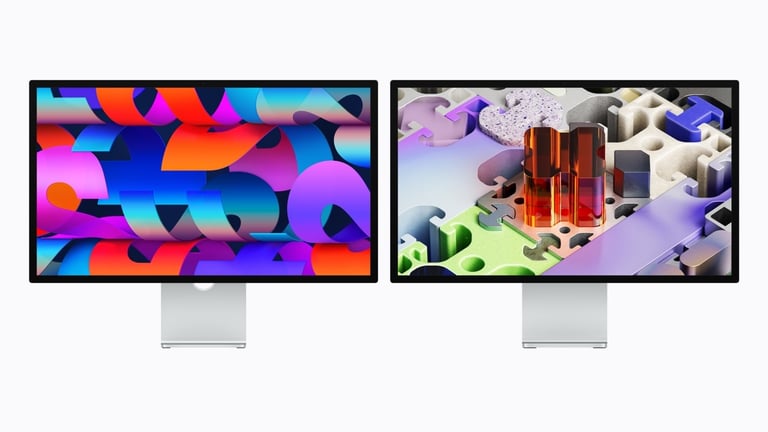

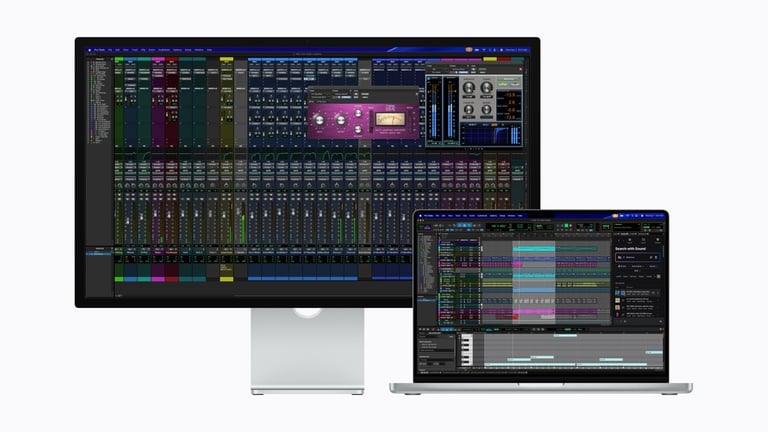
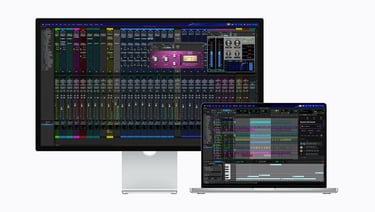
Apple also announced a new family of Studio Displays designed to work beautifully with your Mac. These new monitors are built for a wide range of users.
The updated Apple Studio Display now includes a 12MP Center Stage camera, which automatically keeps you in the frame during video calls. Apple also improved the image quality and added Desk View, which can show your desk while you’re on a call. Along with that, the display features a studio-quality three-microphone array and a six-speaker system with Spatial Audio, making it great for meetings, media, and everyday work.
Another big upgrade is Thunderbolt 5 connectivity, which allows you to connect high-speed accessories or even chain multiple displays together. That makes the setup a lot more flexible, especially if you work with multiple devices.
Apple also introduced the Studio Display XDR, which takes things to a more professional level. It features a 27-inch 5K Retina XDR display with a mini-LED backlight and over 2,000 local dimming zones, delivering incredible contrast and brightness. It can reach up to 2000 nits of HDR brightness, which means HDR content really stands out with deep blacks and bright highlights.
The display also supports a 120Hz refresh rate with Adaptive Sync, making motion feel smoother whether you’re editing video, working with graphics, or even playing games.
Both displays come with Apple’s signature design and can be ordered with standard glass or nano-texture glass to reduce reflections. The new Studio Display starts at $1,599, while the more advanced Studio Display XDR starts at $3,299.
Pre-orders start March 4, and both displays will be available beginning March 11.
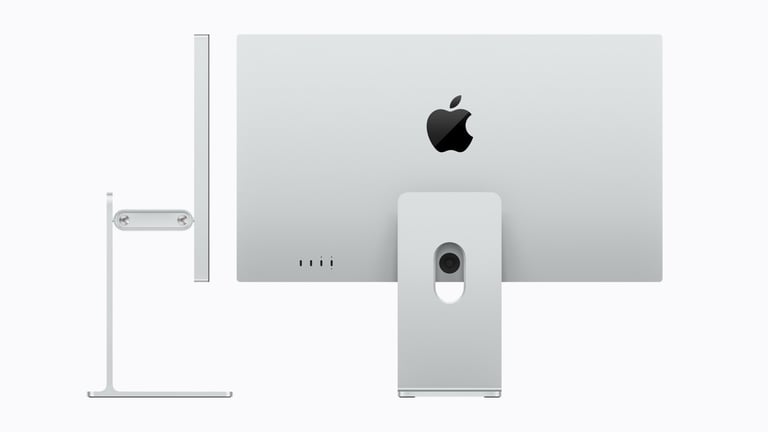
I’ve always liked the design of the Studio Display. It’s one of those Apple products that just looks clean and premium on a desk. The only thing that always felt like a limitation to me was the 60Hz refresh rate. For a display at that price, it felt like something was missing. Especially once you’re used to smoother screens on devices like the MacBook Pro. When you connect a 120Hz MacBook to the Studio Display, it’s a bit disappointing to realize the large monitor still runs at just 60Hz.
That’s why the new Studio Display XDR is much more interesting to me. Apple finally added HDR support and a 120Hz ProMotion refresh rate, which makes everything feel smoother and more responsive. Scrolling, editing, or simply moving around in macOS feels noticeably smoother with the higher refresh rate.
One thing that still surprises me though is the price of the stand. Apple’s displays are beautiful, but paying a lot extra (over $1,000) for just a stand that’s only tilt-adjustable still feels a bit strange to me.
Final Thoughts
Looking at all the announcements together, Apple clearly focused on refining and strengthening its lineup. The MacBook Air (M5), the MacBook Pro powered by the new Apple M5 Pro and Apple M5 Max, and the updated Studio Display lineup show how Apple keeps pushing performance while keeping the overall experience simple and polished.
The MacBook Air M5 is especially interesting to me because it combines portability with a surprising amount of power. I already love how lightweight and travel-friendly the Air is, and with the new chip it looks like it will handle everyday work even better.
At the same time, the MacBook Pro models with the M5 Pro and M5 Max chips remain the machines for serious workloads. Since I’m still working daily on my MacBook Pro with the M1 Pro, it’s impressive to see how far Apple continues to push performance, even 5 years after the release date.
The new Studio Displays are also a nice step forward. The addition of HDR and a 120Hz refresh rate on the Studio Display XDR finally brings the kind of smoothness and visual quality that many Mac users have been waiting for.
Overall, these announcements feel less about reinventing products and more about making already great devices even better. I'm curious to test the devices when they are available.